
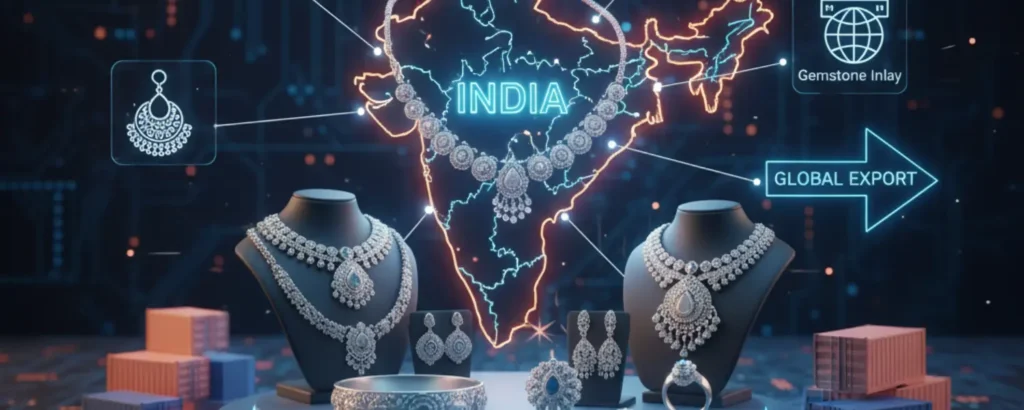
The global demand for silver jewellery has never been stronger. Its unique blend of beauty, versatility, and accessible luxury makes it a staple for consumers worldwide. For international retailers, boutique owners, and importers, India stands as an unparalleled sourcing destination. The nation’s rich heritage in gem-cutting and silversmithing, combined with modern manufacturing, creates a “best-in-class” opportunity for buyers.
But “Indian silver jewellery” is not a single category; it’s a vast universe of styles, qualities, and techniques. As an experienced exporter, we know that understanding these differences is the key to building a profitable and sought-after collection. This is your expert guide to the top types of silver jewellery to source from India for the global market.
1. The Foundation: 925 Sterling Silver Jewellery
This is the non-negotiable standard for any high-quality silver jewellery business. 925 sterling silver is a high-grade alloy that contains 92.5% pure silver and 7.5% other metals (usually copper) for durability.
For your export business, insisting on 925 sterling silver is a mark of quality that builds consumer trust and justifies a premium price point. It is the foundation upon which any reputable collection is built. Be wary of any supplier who is not transparent about this standard; it’s the crucial first question in the silver plated vs sterling debate.
2. The Trendsetter: Oxidized Silver Jewelry
One of the most in-demand categories for export is oxidized silver jewelry. This is not a different type of silver, but rather a finishing technique. The 925 sterling silver is intentionally exposed to a chemical process that darkens the surface, creating an antique, vintage, or “tribal” aesthetic.
This style is incredibly popular in North American and European markets, perfectly aligning with the bohemian, artisanal, and gothic fashion trends. Oxidized pieces often feature intricate details, as the darkening process highlights every groove and pattern, making them look like cherished heirlooms.
3. The Crown Jewel: Handmade Silver & Gemstone Jewelry (The Jaipur Specialty)
This is arguably India’s most significant contribution to the global jewellery market. Jaipur Silver jewelry is world-renowned for a reason. The city is a global hub for both semi-precious gemstone cutting and masterful silver craftsmanship.
When sourcing handmade silver jewelry from this region, you are sourcing art. These pieces combine lustrous sterling silver with a rainbow of semi-precious stones like moonstone, labradorite, amethyst, turquoise, and citrine. For a retailer, this category offers an unbeatable combination:
Uniqueness: The handcrafted nature means no two pieces are identical.
Perceived Value: The combination of silver and genuine gemstones has a high perceived value.
Storytelling: You can market these pieces as authentic, artisan-made treasures.
4. The Cultural Bestseller: Traditional & Ethnic Silver
This category includes iconic, traditional Indian designs that have found a passionate global audience. These are not just accessories; they are cultural statements, and their authenticity is their main draw. Key styles to source include:
Jhumkas & Chandbalis: These intricate, often bell-shaped or chandelier-style earrings are perennial bestsellers.
Payal (Anklets): Especially popular in bohemian and summer collections, Indian silver anklets are known for their delicate bells and detailed chainwork.
Tribal/Kuchi Jewelry: These are bold, substantial pieces with a rustic finish, often using coins, bells, and glass inlays, which have a strong crossover appeal.
5. The Volume Mover: Silver Plated Jewellery
It is critical for a buyer to understand the silver plated vs sterling distinction. Silver-plated jewellery is a fashion (or “costume”) category. It is made from a base metal (like brass or copper) that is coated with a very thin layer of silver.
While it is not fine jewellery, it is an extremely important and profitable category for export. It allows retailers to:
Hit Low Price Points: Offer trendy, high-fashion designs at a fraction of the cost of sterling.
Move High Volume: Ideal for fast-fashion retailers and online marketplaces.
Test New Trends: Quickly produce and test new styles without the investment of precious metal.
A successful importer will often source both sterling and plated jewellery, but from suppliers who are transparent and do not mix the two.
Your Strategic Sourcing Advantage
Understanding these different types of silver jewellery allows you to build a diverse and strategic inventory. India offers a unique advantage because it is a world-class source for all of them. From the high-end, artisan-made gemstone collections of Jaipur to the high-volume fashion pieces, the entire ecosystem exists here.
As a leading partner in wholesale silver jewelry from india, we have the expertise to connect you with the right artisans and manufacturers for each category, ensuring quality, authenticity, and a seamless export experience.
Frequently Asked Questions (FAQs)
Q. What is the main difference in the silver plated vs sterling debate?
925 sterling silver is a precious metal alloy (92.5% pure silver) that has intrinsic value and lasts a lifetime. Silver-plated jewellery is a base metal (like brass) with only a micro-thin coating of silver, which can wear off over time. Both are valid products, but for different markets and price points.
Q. Why is Jaipur silver jewelry so famous for export?
Jaipur is a unique hub where two industries collide: it is one of the world’s largest centers for cutting semi-precious stones, and it has a centuries-old tradition of silversmithing. This combination allows for the creation of high-quality gemstone silver jewellery at an exceptional value.
Q. Is 925 sterling silver sourced from India of good quality?
Yes, absolutely. Reputable Indian manufacturers and exporters adhere to the global 925 standard. The quality of craftsmanship, combined with the material, is what makes it a top export category. Always partner with a trusted exporter who guarantees this standard.
Q. What is oxidized silver jewelry?
It is real sterling silver that has been chemically treated to darken the surface. This creates an “antique” or “patina” look that highlights the details of the design. It is a highly sought-after finish in international markets.
Q. Are traditional Indian designs like jhumkas popular for global export?
Immensely. Their unique, intricate, and authentic cultural designs are exactly what many international consumers are looking for as a way to stand out from mass-market fashion.
Q. Can I order custom or handmade silver jewelry designs in bulk?
Yes. This is a primary advantage of working with Indian exporters. We have relationships with artisan workshops that can produce handmade silver jewelry to your custom specifications, allowing you to create exclusive, private-label collections.
Q. What is the typical lead time for a wholesale silver from india order?
This depends on the complexity and size of the order, especially for handmade items. Generally, production can take 4-8 weeks, plus shipping time. A good exporter will give you a clear timeline upfront.
Q. How does LGI Export Import ensure quality across all these different types?
We have a multi-stage quality control process. We vet our artisan and manufacturing partners based on their specialty. Whether it’s verifying the 925 stamp on a sterling order or checking the finish on a plated order, we inspect all goods to ensure they meet the specific standards required for each category before export.